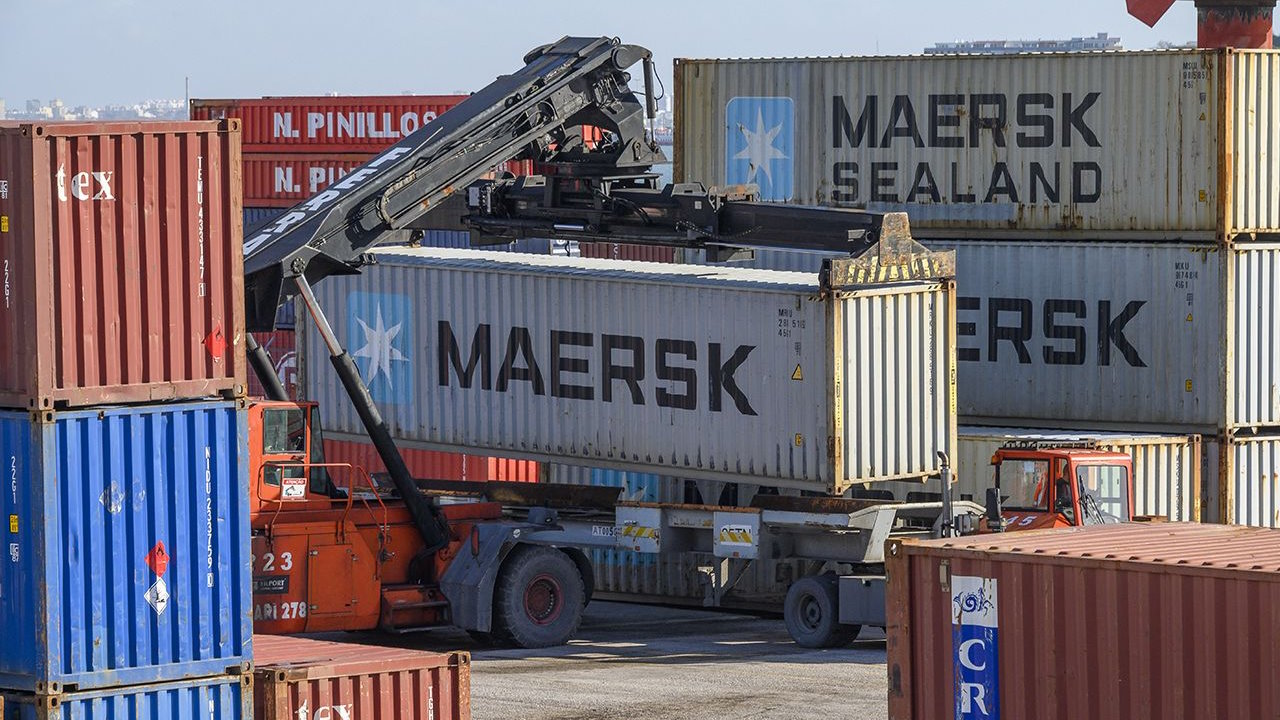
Maersk Ukraine is stopping operations with the terminal in Boryspil, operated by BIT VANTAGE LLC. The company has informed its customers that the decision is related to operational reasons.
At the same time, Maersk has not specified what exactly led to the decision. Customers whose import shipments have not yet arrived at the terminal, are currently in transit, or are planned for shipment are advised to contact Maersk’s Intermodal Department for further instructions.
For Ukraine’s container transportation market, this development is important not only because of the change involving one terminal. It comes amid broader changes to logistics routes and infrastructure that have taken place in Ukraine in recent months.
What happened with the Boryspil terminal?
Maersk has announced that it is stopping operations with the Boryspil terminal operated by BIT VANTAGE LLC.
The official explanation provided by the company is operational reasons. Maersk has not disclosed further details regarding the decision.
The change affects import shipments that:
- have not yet arrived at the Boryspil terminal;
- are currently in transit;
- are scheduled for shipment.
Customers in these situations are advised to contact Maersk’s Intermodal Department to clarify the next steps, routing and cargo handling arrangements.
This means that, at this stage, the announcement concerns Maersk’s operations with a specific terminal rather than a suspension of the company’s container transportation services to Ukraine as a whole.
Why is this important for logistics in Ukraine?
The change involving the Boryspil terminal comes against the background of other significant adjustments to Maersk’s logistics network in Ukraine.
In July 2026, Maersk temporarily suspended its container service through the Port of Chornomorsk following Russian attacks affecting port infrastructure. Some import cargo was subsequently redirected through the Romanian port of Constanta.
This was one example of how the security situation can affect international logistics routes and require carriers to develop alternative entry points for cargo bound for Ukraine.
In August, Maersk also launched a temporary rail service connecting the Port of Constanta in Romania with inland terminals in Ukraine. The service was introduced as an alternative logistics solution amid disruptions affecting ports in the Odesa region.
As a result, Maersk’s logistics network in Ukraine has undergone several adjustments within a relatively short period — from changes to port routes to the development of alternative rail connections and inland terminal solutions.
Is the Boryspil decision related to Russian attacks?
At this stage, there is no direct confirmation of such a connection.
Maersk has officially described the reason for stopping operations with the Boryspil terminal as operational circumstances and has not provided further details.
Therefore, it would be incorrect to state that the decision was directly caused by military attacks.
However, the broader context should not be ignored.
Throughout 2026, Russian attacks have repeatedly affected Ukraine’s transport and port infrastructure. As a result, international carriers have had to consider not only the economic efficiency of their routes but also their operational stability and security.
Against this background, the change involving the Boryspil terminal is another indication that container logistics in Ukraine continues to adapt to changing operational conditions.
What does this mean for importers?
For companies regularly importing goods from China and other Asian countries, changes in terminal operations can have practical consequences.
Depending on the route, the following may change:
- the container discharge location;
- the inland delivery route from the port to Ukraine;
- domestic rail or road transportation;
- delivery times;
- logistics costs;
- cargo handling and documentation procedures.
This is particularly important for businesses planning regular container shipments.
When planning container transportation from China to Ukraine, importers should therefore evaluate not only the carrier’s rate but the entire logistics chain — from the port of departure to the final terminal in Ukraine.
Why alternative routes are becoming increasingly important
Recent developments show that a container route to Ukraine cannot always be expected to remain unchanged throughout the entire transportation process.
Ports, rail terminals and inland logistics hubs may change their operating conditions. For importers, this makes the ability to quickly adjust a route and adapt the delivery scheme increasingly important.
If operations at Ukrainian ports become more difficult, alternative routes through European ports may be considered — including Constanta or Polish ports — followed by rail or road transportation into Ukraine.
The optimal route depends on the type of cargo, shipment volume, destination, current carrier conditions and the cost of each stage of transportation.
Conclusion
Maersk’s decision to stop operations with the Boryspil terminal does not, by itself, mean that the company is suspending container transportation to Ukraine. However, it is another example of how quickly logistics routes can change under current conditions.
Maersk has not disclosed the specific reasons for ending operations with BIT VANTAGE LLC, so linking the decision directly to military risks would be premature.
At the same time, the company’s previous actions — suspending the service through the Port of Chornomorsk, redirecting cargo via Constanta and launching an alternative rail service — demonstrate a broader trend: international logistics operators continue to adapt their routes to changing conditions in Ukraine’s transport infrastructure.
For import businesses, this means that supply chain planning needs to be increasingly flexible. It is important to have not only an agreed transportation rate, but also an alternative logistics route in case operating conditions change.
IMPORT.UA organizes container transportation from China and other Asian countries to Ukraine, providing support at every stage — from transportation arrangements to customs clearance and final delivery.
We monitor changes affecting international carriers and Ukraine’s logistics infrastructure and select the most suitable delivery solution based on the current situation.